

Surgery often starts as a possibility, something your GP or specialist raises as one option among several. Then the possibility becomes a plan, and the practical questions arrive together. Which hospital will it be? How far is it from home, and who will drive you? What will your health fund pay, and what will you pay yourself? And what support will you have once you’re home again?
Many people assume the hospital is simply decided for them. Usually you have some say. Your specialist, your procedure, whether a hospital is clinically suitable for you, and whether you are using insurance or funding the surgery yourself all shape the final choice, but your preferences count too.
If you are weighing up options in Melbourne, Adeney Private Hospital in Kew is one you can raise with your GP or specialist. This guide explains how the choice works, what is worth comparing between hospitals, and where Adeney may fit.
Can you choose which private hospital you have surgery at?
Yes, within limits. In Victoria, you can choose which specialist and hospital your GP refers you to, and as a private patient you can see a doctor of your choice, provided that doctor has the right to practise at the hospital (Better Health Channel, Victorian Department of Health). That condition is where the limits come from. Your realistic options are the hospitals where your specialist is approved to practise. From there, your specialist narrows the list to hospitals that suit your procedure and your health, and your insurance cover or self-funding arrangements narrow it again.
Your specialist influences which hospitals you can choose
Before granting a specialist the right to practise, a hospital checks their qualifications, registration and experience, and defines which procedures they may perform there. This is known as credentialing and defining scope of practice, and the Australian Commission on Safety and Quality in Health Care publishes national guidance for health services on both. In practice, a surgeon can only operate at hospitals where they are approved to practise, and only within their approved scope of practice. So the choice runs both ways. Start with a surgeon you want to see, and your hospital options narrow to where that surgeon is approved to practise. Start with a hospital you prefer, and you choose from the specialists approved there. Adeney works on the same basis. Its accredited specialists cover a range of surgical and medical specialties. Patients access Adeney’s services through a referral from a GP or treating specialist. If you already have a specialist, their rooms can tell you whether they operate at Adeney.
What matters when comparing hospitals
What matters most usually depends on the procedure. For a short day procedure, location and timing may decide it. For an operation followed by several nights in hospital, the room you recover in and the support after discharge can matter just as much.
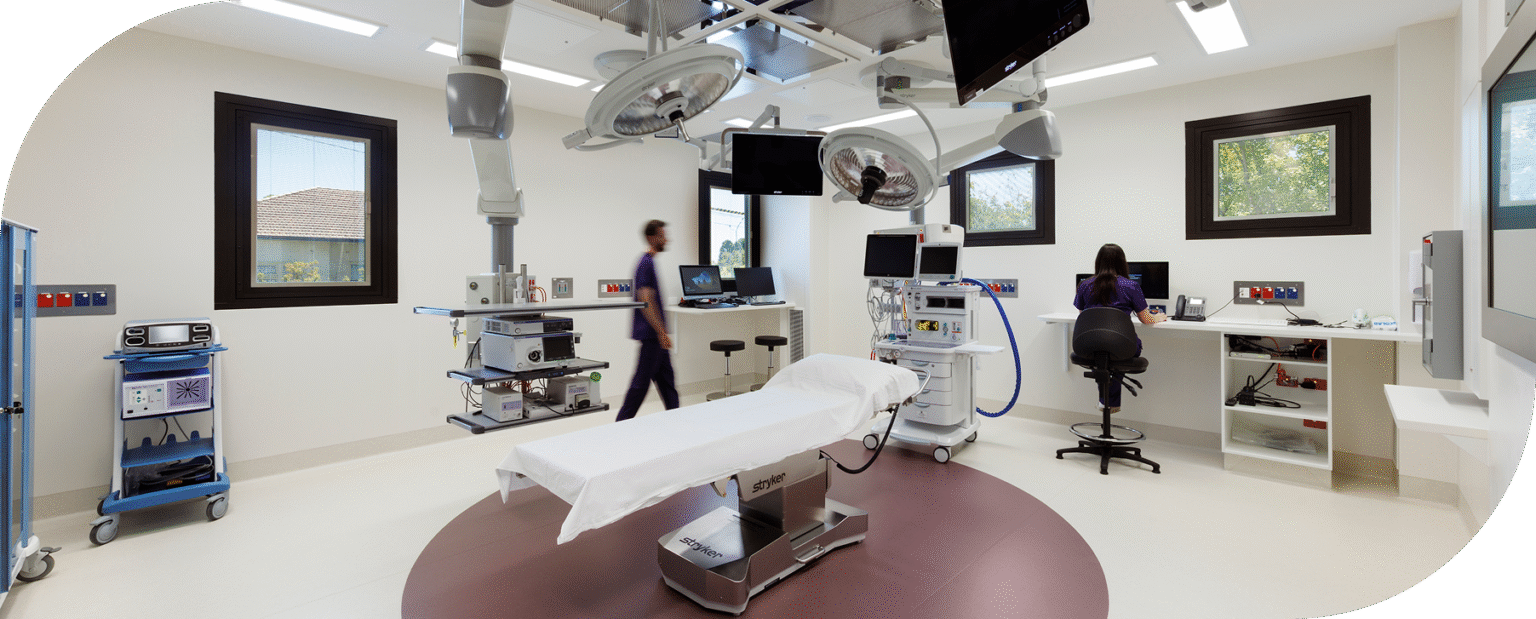
Clinical suitability comes first, and your specialist decides it. They will also advise whether you can go home the same day or need to stay overnight. Adeney provides planned surgery across four operating theatres and a dedicated endoscopy suite, with day surgery and overnight care where clinically appropriate. Your specialist can advise whether these facilities suit your procedure and individual health needs.
If you expect to stay, ask what kind of room you will have, as it can make a real difference to rest and privacy. Inpatients at Adeney recover in private rooms, each with its own ensuite.
Some procedures involve imaging, blood tests or new medications before or after surgery. Having those services on site can make parts of your care more convenient to coordinate. At Adeney, I-MED Radiology, Melbourne Pathology and Slade Pharmacy operate on site.
Recovery doesn’t end at discharge, particularly after procedures such as joint replacement. Adeney’s Wellness Centre works with your surgeon and, where appropriate, your allied health team. Depending on your procedure and needs, that support may include rehabilitation planning or allied health services such as physiotherapy.
Cost certainty can also shape the decision. Two hospitals may suit your procedure equally well yet leave you with very different bills. At Adeney, eligible Medibank Private and Bupa members may have zero out-of-pocket inpatient costs under the hospital’s current arrangements. Conditions apply, and the cost section below explains what that covers and what it doesn’t.
Location and surgery dates are the practical end of the decision. Adeney is in Kew, and how convenient that is will depend on where you live and who is taking you home afterwards.
How to compare your hospital options
If your specialist operates at more than one hospital, you may be able to choose between them. These questions help you compare them on the things that affect you:
- Is each hospital clinically suitable for my procedure and my health needs?
- Would I be treated as a day patient, or would I need to stay overnight?
- Which facilities and recovery services are relevant to my procedure, including support after I go home?
- Would I have a private room?
- What will my fund cover at each hospital, and what will I pay?
- Which surgery dates are available?
- How practical is the location for me and for the person taking me home?
Your specialist can answer the clinical questions. The cost question usually takes the longest, so start on it early.
Understanding private hospital costs
Private surgery rarely arrives as one bill. Depending on your procedure and cover, the hospital, your surgeon or specialist, and your anaesthetist may each charge you separately, and pathology, radiology, pharmacy or other services may add further charges.
You are entitled to ask your doctor, your health fund and your hospital about any out-of-pocket costs, and to request an estimate before you agree to treatment (Commonwealth Ombudsman). This is known as informed financial consent. Ask each provider for a written estimate. A hospital’s estimate normally covers only the hospital’s own charges, not your surgeon’s or anaesthetist’s fees (Cancer Council NSW).
Each party answers a different part of the question. Your specialist’s rooms can provide the relevant Medicare item number(s), where applicable, and explain their own fees. The hospital can explain its charges and admission arrangements. Your health fund confirms your cover, excess, co-payments and exclusions, so check with both the hospital and the fund before you book. Adeney accepts the vast majority of Australian private health funds, and explains how cover works on its page for patients with private health insurance.
Zero out-of-pocket at Adeney: what it covers and what it doesn’t
If you have insurance, the gap between what your fund pays and what providers charge is the part of the bill most worth checking. Adeney’s zero out-of-pocket arrangements address that gap for eligible patients, which is why they can make a real difference when comparing hospitals.
Under Adeney’s current arrangements, eligible Medibank Private and Bupa members may have zero out-of-pocket inpatient costs, subject to the relevant fund arrangement, policy cover, excesses, co-payments and exclusions. Adeney lists surgeon, anaesthetist and surgical assistant fees, pathology, radiology, pharmacy and physiotherapy (where appropriate) among the covered inpatient costs. Some non-standard care is not included.
Zero out-of-pocket does not mean every patient pays nothing. Eligibility depends on your fund and your individual policy, so confirm it with both Adeney and your fund before you book. Adeney sets out full details and exceptions for Medibank Private members and Bupa members.
Having surgery without private health insurance
You can still consider private surgery as a self-funded patient. Adeney welcomes self-funded patients, although availability can depend on your procedure and specialist, so check early. Written estimates matter most here, because no fund benefit will offset any part of the bill. Ask the hospital, your surgeon and your anaesthetist for separate estimates before you agree to treatment. Adeney’s page for patients without private health insurance explains the options.
If your plans change
Some patients want to move their surgery after the first consultation, perhaps for an earlier date or a hospital that suits them better. That may be possible if your specialist is approved to practise at the other hospital and it is clinically suitable for your procedure. You would then need new surgery dates, confirmation of your cover at that hospital and a fresh cost estimate. Raise it with your specialist’s rooms early, since rebooking involves both the rooms and the hospital.
If Adeney is one of your options
Choosing a hospital isn’t only about where the procedure takes place. It’s also about feeling confident that you understand what will happen, what you may need to pay and who you can call when questions come up.
Where you start depends on where you are up to.
 If you already have a specialist, ask their rooms whether they operate at Adeney and whether it is suitable for your procedure.
If you haven’t been referred yet, look through Adeney’s specialist doctors for someone who treats your condition, then talk to your GP about a referral.
If your questions are about admission, hospital charges, your cover or self-funded care, contact Adeney or call (03) 7049 5000.
Browse Adeney’s specialist doctors
Frequently asked questions
How do I find out whether my specialist operates at Adeney?
Ask your specialist’s rooms whether the specialist is approved to practise at Adeney Private Hospital and whether Adeney suits your procedure. You can also search Adeney’s online directory of specialist doctors or call Adeney on (03) 7049 5000.
What information should I have before asking my health fund about cover?
Have the Medicare item number(s) for your procedure, where applicable, which your specialist’s rooms can provide. Tell your fund which hospital you are considering and whether you expect a day admission or an overnight stay, then ask about your excess, co-payments and exclusions.
Does zero out-of-pocket mean every patient pays nothing?
No. At Adeney Private Hospital, zero out-of-pocket inpatient costs may apply only to eligible Medibank Private and Bupa members. Your policy’s excess, co-payments and exclusions can still apply, and non-standard care is not included. Check your eligibility with Adeney and your health fund before booking.
Can I choose Adeney if my specialist operates at more than one hospital?
Yes, you can tell your specialist you would prefer Adeney. Your specialist will confirm whether Adeney is clinically suitable for your procedure, and you can then compare surgery dates, cover and estimated costs before deciding.
Who should I contact about hospital charges, admission arrangements or self-funded care?
Contact Adeney Private Hospital on (03) 7049 5000 about its hospital charges, admission arrangements or self-funded care. Your surgeon’s and anaesthetist’s rooms handle questions about their own fees, and your health fund confirms your cover.